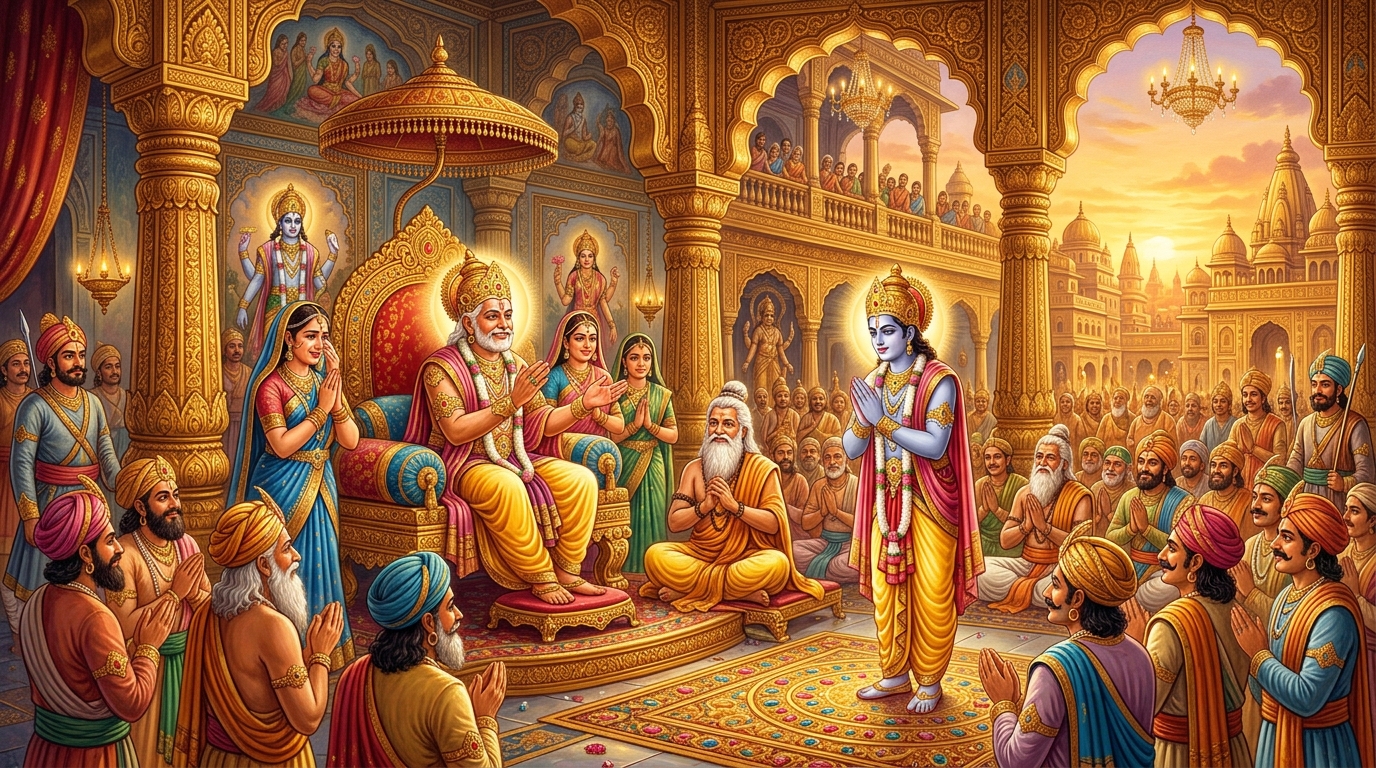
రాముడు కౌసల్యాదేవికి ధైర్యము చెప్పి సమాశ్వాసనము నొసగుట, తల్లులందరికీ ప్రణమిల్లి వీడ్కోలు తీసుకొనుట.
శ్రీరాముడు వనగమనమునకై సకల మాతృమూర్తుల వీడ్కోలు పొందుట, కౌసల్య సీతకు పాతివ్రత్య ధర్మములను ఉపదేశించుట, సీత ధర్మబద్ధమైన సమాధానము చెప్పుట, రాముడు మూడువందల ఏబది మంది తల్లుల అనుజ్ఞ కోరుట అను ముప్పది తొమ్మిదవ సర్గ ప్రారంభమైనది.
The commencement of the thirty-ninth sarga of Ayodhya Kanda, describing Sri Rama taking leave of King Dasharatha and all royal mothers, Queen Kausalya's counsel to Sita on wifely devotion, Sita's noble response, and Rama's farewell to the three hundred and fifty mothers.
శ్రీరాముని అమృతతుల్యమైన వచనములను విని, మునివేషమును ధరించియున్న ఆ పుత్రుని చూచి,
Hearkening to Sri Rama's solemn words and beholding him clad in the austere garb of an ascetic hermit,
తన రాణులతో కూడియున్న దశరథ మహారాజు శోకాతిశయముచేత చేష్టలుడిగి స్పృహ తప్పిపోయెను.
Surrounded by his weeping wives, King Dasharatha lost consciousness, entirely overwhelmed by sorrow.
దుఃఖముచేత దహింపబడుచున్న ఆ మహారాజు ఎదురుగా నిలబడియున్న రఘురాముని వైపు కనులెత్తి చూడనైనను లేకపోయెను.
Tormented by agonizing sorrow, the afflicted king could not even bring himself to gaze upon Raghava.
తీవ్రమైన వేదనతో కుమిలిపోవుచున్న మనస్సు కలవాడై, రాముని చూచి ఒక్క మాటయైనను మాట్లాడజాలకపోయెను.
With a broken heart, despondent and devastated, he was utterly unable to utter a single word in reply to Rama.
ఆ భూపతి కొద్దిసేపు నిశ్చేష్టుడై అచేతనునివలె ఉండి, పిమ్మట తీవ్రమైన దుఃఖముతో,
Remaining senseless for a while like an unconscious man, the grieving monarch regained slight awareness and,
శ్రీరాముని దివ్యగుణములను మాటిమాటికి స్మరించుకొనుచు దీనముగా విలపించసాగెను.
Contemplating continuously on Rama's transcendent virtues, that mighty-armed king lamented piteously.
నేను పూర్వజన్మలయందు నిశ్చయముగా పెక్కు గోవులను తమ లేగదూడల నుండి వేరుచేసి యుందునని తలంచుచున్నాను.
'Verily, in former lives I must have forcibly separated countless mother cows from their beloved calves.'
లేదా ఎందరో ప్రాణులకు అపారమైన హింసను గావించియుందును; ఆ ఘోర పాపకర్మ ఫలమే ఇప్పుడు నాకిట్లు పుత్రవియోగ రూపమున దాపురించినది.
'Or perhaps I inflicted cruel torment upon living beings; wherefore this agonizing retribution of separation from my son has befallen me.'
ఆయుష్షు తీరకమునుపు ప్రాణము ఎంతటి దుఃఖము వచ్చినను దేహమును వీడి పోదు కదా!
'Life never departs from the body before the destined hour arrives, no matter how severe the suffering.'
కైకేయిచేత ఇంతగా పీడింపబడుచున్నను, ఈ ఘోర శోకములో కూడ నాకు మృత్యువు కలుగుటలేదు కదా!
'Though thus ruthlessly tormented by Kaikeyi, death does not release me from this agonizing mortal coil!'
తేజస్సుచే అగ్నిహోత్రునివలె ప్రకాశించుచున్న నా కుమారుడు ఎదుట నిలచియుండగా,
'I, who behold my illustrious son standing before me radiant as sacrificial fire,'
సున్నితమైన దివ్య పట్టువస్త్రములను విడనాడి, తపస్వుల వల్కలములను ధరించియున్న నా పుత్రుని చూచుచు బ్రతికియున్నాను కదా!
'Seeing my own son stripped of fine silks and clothed in the coarse garments of an ascetic hermit, yet I still breathe!'
ఒక్క కైకేయి దురాశ కొరకై, ఆమె స్వార్థచింతన కొరకై ఈ సమస్త అయోధ్యా ప్రజలు ఇంతటి తీవ్ర క్షోభకు గురియగుచున్నారు.
'Verily, for the sake of Kaikeyi alone, who pursues her selfish ends through low deceit, this entire populace is plunged into anguish.'
కపటమైన కుతంత్రమును ఆశ్రయించి, తన స్వార్థ ప్రయోజనమునే సాధింపజూచుచున్న ఆ కైకేయివలన ఈ వినాశనము జరిగినది.
'Resorting to vile duplicity and ruthless obstinacy solely to achieve her selfish desires, she has wrought this ruin.'
ఈ విధముగా పలికి దశరథ మహారాజు కన్నీటిధారలచేత ఇంద్రియములన్నియు స్తంభించిపోగా,
Speaking these words, the king, his senses choked and overwhelmed by flooding tears,
'హా రామా!' అని ఒక్కసారి మాత్రమే పలికి, ఆపై గొంతు పెగలక ఒక్క మాట కూడ మాట్లాడలేకపోయెను.
Uttering only once the cry 'O Rama!', he could speak no further, his voice stifled by agonizing sorrow.
క్షణకాలమునకు స్పృహను తిరిగి పొంది, ఆ దశరథ మహారాజు,
Regaining consciousness after a short while, that righteous emperor,
కన్నీటితో నిండిన నేత్రములతో చూచుచు, రథసారథియగు సుమంత్రునితో ఈ వచనములను పలికెను.
Gazing with eyes brimful of streaming tears, addressed the charioteer Sumantra with these instructions.
సుమంత్రా! శ్రేష్ఠములైన ఉత్తమాశ్వములను పూన్చి, రాజోచితమైన దివ్యరథమును వెంటనే సిద్ధము చేసి తీసికొనిరమ్ము.
'Sumantra! Yoke the finest celestial steeds to the royal chariot and bring it hither without delay.'
మహాభాగుడైన ఈ శ్రీరాముని ఈ రాజ్యము యొక్క సరిహద్దులను దాటించి వనములకు చేర్పుము.
'Convey this exalted prince Rama beyond the borders of our realm into the forest.'
సద్గుణసంపన్నులైన సత్పురుషుల ఉత్తమ గుణములకు లోకములో లభించు ఫలము ఇట్టిదే కాబోలు అని నేను తలంచుచున్నాను.
'Verily, I deem this to be the reward that virtue yields unto the virtuous in this world!'
ఏలననగా, పరమ ధర్మాత్ముడును, మహావీరుడునైన శ్రీరాముడు స్వయముగా తన తల్లిదండ్రులచేతనే వనవాసమునకు వెడలనడపబడుచున్నాడు కదా!
'Inasmuch as a saintly and valiant hero like Rama is driven into exile by his very own father and mother!'
మహారాజు యొక్క ఆజ్ఞను శిరసావహించి, శీఘ్రగమనుడైన సుమంత్రుడు వేగముగా వెళ్ళి,
Obeying the command of the monarch, the swift-paced Sumantra hastened forth,
ఉత్తమ గుఱ్ఱములతోను, సకల రత్నభూషణములతోను అలంకరింపబడిన దివ్యరథమును సిద్ధముచేసి సభాద్వారము వద్దకు తీసికొనివచ్చెను.
And yoking noble steeds to the splendidly adorned chariot, brought it before the royal presence.
బంగారు ఆభరణములతో ప్రకాశించుచున్న ఆ రథమును చూపిస్తూ, సారథియగు సుమంత్రుడు రాజపుత్రుడగు శ్రీరామునికి వినయముగా చేతులు జోడించి నివేదించెను.
With joined palms, the charioteer Sumantra announced to the prince that the golden-embossed chariot was ready.
ఉత్తమాశ్వములు పూన్చబడిన ఆ రథము సంసిద్ధముగా ఉన్నదని దోసిలియొగ్గి విన్నవించెను.
He submitted with reverence that the chariot yoked with supreme steeds was awaiting his ascension.
అంతట దశరథ మహారాజు కోశాధికారిని త్వరితముగా పిలిపించెను.
Then King Dasharatha promptly summoned the royal treasurer in charge of the state treasury,
దేశకాలములను ఎరిగినవాడును, దృఢచిత్తుడును, సర్వదా పరమ పవిత్రమైన నడవడిక కలవాడునైన ఆ కోశాధికారితో మహారాజు ఇట్లు పలికెను.
And addressed that official, who was discerning of time and place, resolute in duty, and impeccably honest in all matters.
అమూల్యములైన శ్రేష్ఠ వస్త్రములను, దివ్యమైన రాజోచిత ఆభరణములను,
'Gather costliest apparel of fine silk, and choicest royal ornaments,'
ఈ పదునాలుగు సంవత్సరముల కాలమునకు సరిపడు సంఖ్యను లెక్కగట్టి, సీతాదేవి కొరకు వెంటనే తీసికొనిరమ్ము.
'Reckoning the exact requirement for these fourteen years, bring them forth swiftly for Princess Vaidehi.'
నరేంద్రుడైన దశరథుడు ఆజ్ఞాపించగానే ఆ అధికారి వెంటనే భాండాగారమునకు వెళ్ళి,
Thus commanded by the emperor, the treasurer proceeded at once to the royal treasury,
పదునాలుగేండ్లకు సరిపడు దివ్యాంబరములను, నవరత్నాభరణములను సమకూర్చి తీసికొనివచ్చి సీతాదేవికి సమర్పించెను.
And fetching all those precious garments and jewels in abundant measure, presented them respectfully to Sita.
ఉత్తమ కులమున జన్మించిన పరమ సాధ్వియగు ఆ వైదేహి వనవాసమునకు బయలుదేరుచున్నదై,
That high-born princess Vaidehi, preparing to depart for the wilderness,
విచిత్రమైన రత్నాభరణములతో, దివ్యవస్త్రములతో తన శరీరమును సర్వాంగ సుందరముగా అలంకరించుకొనెను.
Adorned her delicate limbs with those splendid, manifold ornaments and royal raiment.
దివ్యాభరణములను ధరించిన సీతాదేవి తన అద్భుత సౌందర్య తేజస్సుతో ఆ రాజభవనమునంతటిని దేదీప్యమానముగా వెలిగింపజేసెను.
Exquisitely adorned, Vaidehi illumined that royal palace with her celestial radiance,
ఉదయకాలమునందు ఉదయించుచున్న సూర్యభగవానుని కాంతి ఆకాశమంతయు ప్రకాశింపజేయునట్లు సీతాదేవి శోభిల్లిల్లెను.
Even as the crimson brilliance of the rising sun irradiates the sky at dawn.
అట్లు ప్రకాశించుచున్న కోడలగు సీతను అత్తగారైన కౌసల్యాదేవి దగ్గరకు తీసికొని, ప్రేమతో కౌగిలించుకొనెను.
Drawing that beloved daughter-in-law close and clasping her within her arms,
ఆమె శిరస్సును మాతృవాత్సల్యముతో మూర్కొనుచు, కౌసల్యాదేవి ఈ ధర్మయుక్తమైన హితవచనములను పలికెను.
Affectionately smelling her head in motherly benediction, Kausalya spoke these words of sacred counsel.
ఈ లోకములో భర్తలచేత సదా ఆదరింపబడి, సకల భోగములను అనుభవించిన దుష్ట స్త్రీలు కొందరు,
'In this mortal world, unchaste women, though ever pampered and cherished by devoted husbands,'
భర్తకు ఏదైన ఆపదగాని, కష్టకాలముగాని దాపురించినప్పుడు అతనిని తృణీకరించి నిరసింతురు.
'Fail to honor and stand by their lord when sudden misfortune or distress overtakes him.'
పూర్వము సంపదలలో సర్వ సుఖములను అనుభవించి, తరువాత కొద్దిపాటి కష్టము రాగానే భర్తను దూషించుట దుశ్శీలలైన స్త్రీల స్వభావము.
'Such is the unrighteous nature of shallow women: having enjoyed plentiful pleasures in prosperous times,'
అల్పమైన ఆపద కలుగగానే భర్తయందు దోషములను ఎంచుదురు, చివరకు అతనిని పరిత్యజింతురు కూడ.
'They revile their husbands upon the slightest adversity, and even abandon them heartlessly.'
అట్టి అసత్యశీలలు, వికార చిత్తము కలవారు, దుర్భేద్యమైన కుటిల హృదయము కలవారు, ప్రేమలేనివారు అగుదురు.
'Unfaithful, fickle-minded, deceitful, and devoid of genuine compassion are such degraded women;'
వారు పరస్పర ప్రీతిని, భర్త చూపిన పూర్వ వాత్సల్యమును ఏమాత్రము తలంపక నిరంతరము దోషములనే ఆపాదింతురు.
'Tainted by vices, they never cherish former love nor acknowledge the husband's enduring affection.'
ఉన్నత వంశాచారముగాని, భర్త చేసిన ఉపకారములుగాని, సద్విద్యా వివేకముగాని, భర్త ఇచ్చిన దానములుగాని వారిని నిలుపలేవు.
'Neither noble lineage, nor past benefactions, nor sacred learning, nor gifts, nor tender protection can bind unchaste women;'
ధర్మవర్తనము లేని స్త్రీలకు ఏ నియమమును బంధనము కాజాలదు; పతివ్రతలకు మాత్రమే ఆత్మశీలమే పరమ బంధనమగును.
'To women destitute of virtue, nothing serves as a restraint; but for righteous wives, their own spotless chastity is the supreme anchor.'
సత్యమునందు, శాస్త్రజ్ఞానమునందు, పాతివ్రత్య శీలమునందు నిష్ఠతో నిలబడిన ఉత్తమ సాధ్వులకు,
'However, for saintly wives anchored immovably in purity of character, truthfulness, and scriptural wisdom,'
తమ భర్త ఒక్కడే సర్వోత్కృష్టమైన, పరమ పవిత్రమైన పరదైవమై విశేషముగా విరాజిల్లును.
'Their husband alone stands exalted as the supreme sacred deity and ultimate refuge.'
కావున వనవాసమునకు పంపబడిన నా కుమారుడైన రాముని నీవు ఎన్నడైనను అవమానింపదగదు.
'Therefore, though my son is now banished into the wilderness, he must never be slighted by you in any manner.'
శ్రీరాముడు ధనహీనుడైనను సరే, అఖండ రాజ్యసంపన్నుడైనను సరే, అతడే నీకు ప్రత్యక్ష దైవముగా ఉండుగాక!
'Whether he be stripped of riches or endowed with vast wealth, let him ever remain your supreme living deity.'
ధర్మార్థములతో కూడిన అత్తగారైన కౌసల్య యొక్క ఆ హితవచనములను విని, సీతాదేవి,
Comprehending those words replete with righteous wisdom spoken by her mother-in-law, Sita,
ఎదురుగా నిలచియున్న ఆ అత్తగారికి చేతులు జోడించి నమస్కరించి, ఈ వినమ్ర వచనములను పలికెను.
Standing humbly before her mother-in-law with folded palms, addressed her with profound reverence.
పూజ్యురాలైన అత్తగారు నాకు దేనిని ఆజ్ఞాపించిరో, ఆ సమస్త ధర్మములను నేను యథాతథముగా ఆచరింతును.
'All that you, my revered mother, have enjoined upon me, I shall faithfully perform without fail.'
భర్తయెడల భార్య ఎట్లు వర్తింపవలెనో నేను నా తల్లిదండ్రుల వద్దను, గురువుల వద్దను చక్కగా విని నేర్చుకొనియున్నాను.
'I am already well-instructed in how a wife ought to conduct herself towards her husband, having learned it from wise elders.'
పూజ్యురాలైన మీరు నన్ను దుష్ట స్త్రీలతో సమానముగా పోల్చి అనుమానింపదగదు.
'Revered Mother! You ought not to place me in the same balance with unchaste, shallow women.'
చంద్రుని నుండి వెన్నెల వేరుపడనట్లు, నేను పాతివ్రత్య ధర్మము నుండి ఎన్నడును వేరుపడజాలను.
'Just as radiance can never detach itself from the cool moon, even so am I utterly incapable of departing from dharma.'
తీగలు లేని వీణ మ్రోగనేరదు; చక్రములు లేని రథము నడువనేరదు;
'A lute without strings can produce no melody; a chariot without wheels cannot move;'
నూరుమంది కొడుకులు కలదైనను, భర్తను కోల్పోయిన స్త్రీ ఎన్నడును సుఖమును పొందజాలదు.
'And a woman bereft of her husband can never attain true joy, even though she be blessed with a hundred sons.'
తండ్రి పరిమితముగనే ఇచ్చును; తల్లి పరిమితమైన సుఖమునే ఇచ్చును; పుత్రుడును పరిమితముగనే ఇచ్చును;
'A father bestows limited gifts; a mother bestows measured affection; a son bestows finite support;'
ఇహపరములయందు అపరిమితమైన ఆనందమును, ధర్మమును ప్రసాదించు భర్తను ఏ పతివ్రత పూజింపకుండును?
'Who indeed would not revere the husband, who is the gracious bestower of limitless blessings both in this world and beyond?'
శ్రేష్ఠమైన ఉత్తమ కులమున పుట్టి, సమస్త ధర్మాధర్మముల రహస్యములను సశాస్త్రీయముగా విని గ్రహించిన నేను,
'Being thus established in noble traditions, and possessing thorough discernment of higher and lower dharmas through scriptural study,'
పూజ్యురాలైన అమ్మా! నా భర్తను ఎందుకు అవమానింతును? స్త్రీలకు భర్తయే సాక్షాత్ పరదైవము కదా!
'O noble mother! Why would I ever slight my lord? For to women, the husband is veritable divinity.'
సీతాదేవి పలికిన హృదయానికి హత్తుకొను ధర్మయుక్త వాక్యములను విని, పరమ పవిత్ర చరిత్రయగు కౌసల్యాదేవి,
Hearkening to Sita's deeply touching words that went straight to the heart, noble Kausalya of pure soul,
ఒక్కసారిగా దుఃఖముచేతను, కోడలి ధర్మనిష్ఠను చూచిన హర్షముచేతను కలిగిన ఆనందబాష్పములను రాల్చెను.
Shed tears born simultaneously of deep grief and intense joy at her daughter-in-law's sublime righteousness.
సకల రాజమాతల నడుమ విశేషముగా గౌరవింపబడుచున్న ఆ కౌసల్యాదేవిని పరమ ధర్మాత్ముడగు రాముడు చేరి దోసిలొగ్గి,
Approaching with folded palms his revered mother Kausalya, who was held in highest veneration among all royal queens,
పరమ ధార్మికుడైన శ్రీరాముడు తన మాతృమూర్తితో ఈ అనునయ వచనములను పలికెను.
The supremely righteous Rama spoke these comforting words unto his mother.
అమ్మా! నీవు ఎంతమాత్రము దుఃఖింపవలదు; నా తండ్రియగు దశరథ మహారాజును సదా కనిపెట్టుకొని సేవింపుము.
'O mother! Do not grieve in the least; look after and attend upon my aged father Dasharatha with utmost care.'
ఈ వనవాస కాలము అత్యంత వేగముగా ముగిసిపోవును కదా!
'For the duration of this forest-dwelling will pass away very swiftly.'
నీవు నిద్రించి మేల్కొనునంతలో ఈ పదునాలుగు సంవత్సరములు (తొమ్మిది మరియు ఐదు ఏండ్లు) ఇట్టే గడచిపోవును.
'As though you had merely slept through a night, these fourteen years (nine plus five) shall glide away.'
అంతట సకల బంధుమిత్రులతోను, లక్ష్మణ సీతలతోను క్షేమముగా తిరిగి వచ్చిన నన్ను నీవు కనులారా చూచి ఆనందింపగలవు.
'And you shall behold me returned hither safely, in full health and glory, surrounded by loving friends.'
ఈ విధముగా అత్యంత అనుకూలమైన, అర్థవంతమైన వచనములను తల్లికి పలికి,
Having spoken words of such profound propriety and comfort to his mother,
అక్కడున్న మూడువందల ఏబది మంది ఇతర మాతృమూర్తులను రాముడు భక్తితో తిలకించెను.
Rama turned his gaze respectfully upon the three hundred and fifty royal step-mothers gathered there.
శోకముతో కుమిలిపోవుచున్న ఆ సమస్త మాతృమూర్తులకు దశరథపుత్రుడైన రాముడు చేతులు జోడించి,
To those weeping mothers also, who were distressed with equal anguish, Prince Rama addressed with folded hands,
ధర్మయుక్తమైన ఈ వినమ్ర ప్రార్థనను సమర్పించెను.
Speaking these righteous and respectful words with utmost humility.
తల్లులారా! మీ అందరితో కలసి జీవించునప్పుడు చనువు చేతగాని, లేదా అజ్ఞానము చేతగాని నావలన ఏమైనను కఠినమైన పలుకులుగాని, అపరాధములుగాని జరిగియున్నచో,
'Revered mothers! If, while dwelling together, I ever spoke any harsh word or committed any fault out of familiarity or ignorance,'
వాటన్నింటిని మన్నింపుడు; మీ అందరి వీడ్కోలును, ఆశీస్సులను వేడుకొనుచున్నాను.
'Pray forgive that unto me; I take respectful leave of you all and seek your blessings.'
ధర్మసహితమును, పరిపూర్ణ శాంతితో కూడినదియునైన రాఘవుని ఈ మృదువచనములను విని,
Hearing these righteous, composed, and tranquil words of Raghava,
అక్కడున్న స్త్రీలందరును శోకముచేత మనస్సులు వికలమై విలపించిరి.
All those royal women, their hearts shattered with intense sorrow, heard him and wept bitterly.
ఆ సమయమున ఆ అంతఃపుర స్త్రీల యొక్క రోదన క్రౌంచ పక్షుల ఆర్తనాదమువలె మిన్నంటినది.
Thereupon arose a piercing wail of mourning from them, like the cry of krauncha birds in distress,
రాముడు ఈ విధముగా వినయపూర్వకముగా పలుకుచుండగా, దశరథుని భార్యలందరును పెద్దపెట్టున రోదించిరి.
As Raghava spoke thus, all the consorts of the monarch wept with overwhelming sorrow.
మృదంగములు, పణవములు, మేఘగర్జనల వంటి మంగళ వాద్యధ్వనులతో,
Resounding formerly with festive rhythms of mridangas, panavas, and deep cloud-like drums,
పూర్వము ఎల్లప్పుడును ఉత్సవ సంభ్రమములతో వెల్లివిరిసిన దశరథుని రాజభవనము,
That palace of Dasharatha which formerly echoed with joy,
ఇప్పుడు హాహాకారములతోను, కన్నీటి ఏడ్పులతోను నిండిపోయి,
Now became filled with piteous lamentations, wailing, and inconsolable weeping,
ఘోరమైన ఆపద దాపురించి పరమ దుఃఖసాగరములో మునిగిపోయినది.
Plunged headlong into a profound catastrophe of unbearable grief.
ఈ విధముగా వాల్మీకి మహర్షి ప్రణీతమై, ఆదికావ్యమైన శ్రీమద్రామాయణము నందలి అయోధ్యాకాండములో కౌసల్య సీతకు ధర్మోపదేశము, రాముడు సకల తల్లుల వీడ్కోలు పొందుట అను ముప్పది తొమ్మిదవ సర్గ సమాప్తమైనది.
Thus concludes the thirty-ninth sarga of Ayodhya Kanda in the revered Valmiki Ramayana, the glorious first epic, describing Kausalya instructing Sita in wifely dharma and Rama bidding farewell to all the royal mothers.