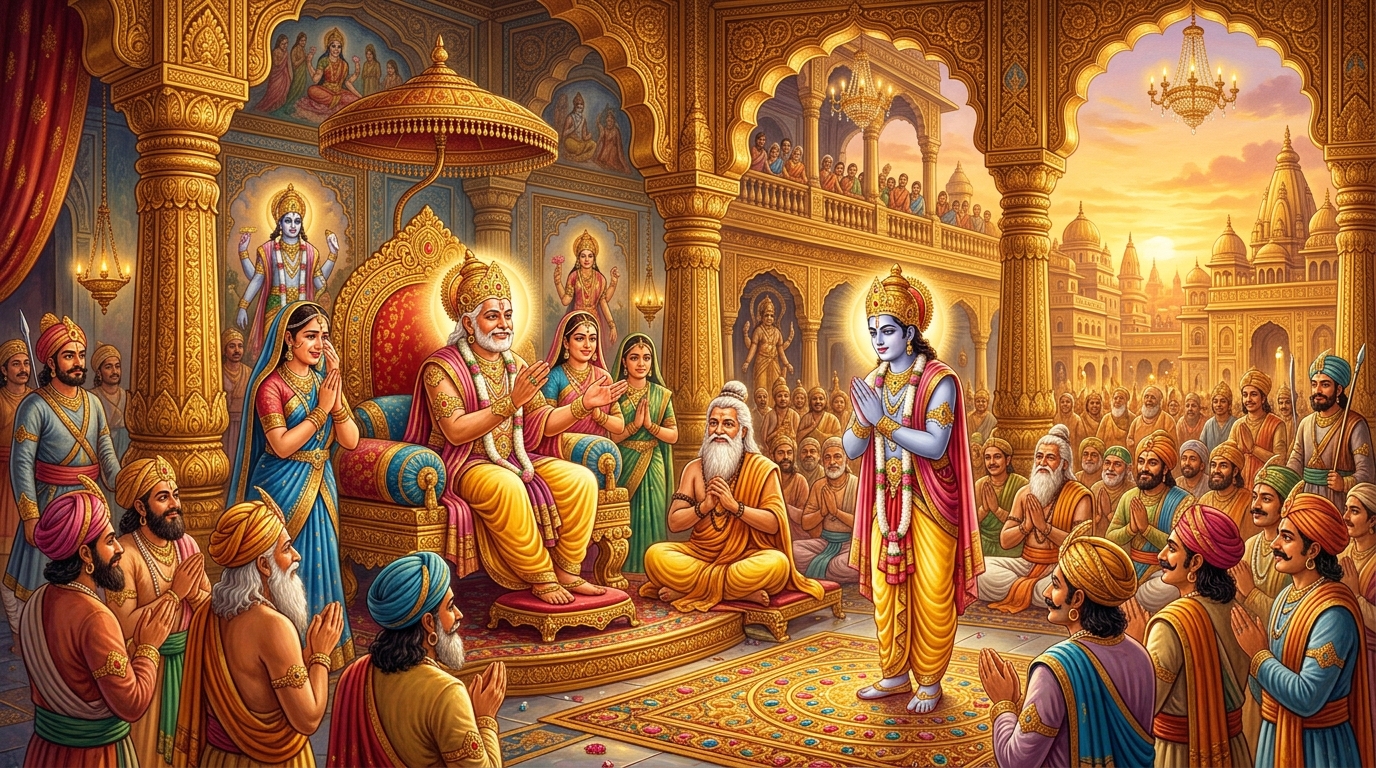
సీతారామలక్ష్మణులు సుమంత్రుని రథమునధిరోహించి ప్రయాణమగుట, సమస్త ప్రజలు హాహాకారములు చేయుచు రథమువెంట పరుగులిడుట.
శ్రీరామలక్ష్మణ సీతలు దశరథ కౌసల్యా సుమిత్రలకు ప్రదక్షిణ నమస్కారములు చేయుట, సుమిత్రాదేవి లక్ష్మణునకు ధర్మోపదేశము చేయుట, రథారోహణము, పౌరులు రథము వెంట పరుగెత్తుచు ఆక్రోశించుట అను నలువదవ సర్గ ప్రారంభమైనది.
The commencement of the fortieth sarga of Ayodhya Kanda, depicting Sri Rama, Sita, and Lakshmana circumambulating their parents, Mother Sumitra instructing Lakshmana, ascending the chariot, and citizens running weeping behind the departing chariot.
అటుపిమ్మట శ్రీరాముడును, సీతాదేవియు, లక్ష్మణుడును చేతులు జోడించి నమస్కారము చేయుచు,
Thereafter, Sri Rama, Sita, and Lakshmana, standing with reverently joined palms,
శోకార్తులై దీనభావముతో దశరథ మహారాజు పాదపద్మములను స్పృశించి నమస్కరించి, ప్రదక్షిణము గావించిరి.
Humbly touched the feet of the sorrowing King Dasharatha and performed circumambulation around him with profound grief.
ధర్మజ్ఞుడైన రఘురాముడు సీతాదేవితో కలిసి తండ్రియగు దశరథుని వీడ్కోలు అనుమతిని పొంది,
Having obtained formal leave and blessings from his father, the righteous Raghava, along with Sita,
శోకముచేత పరవశుడై, మాతృమూర్తియగు కౌసల్యాదేవి పాదములకు సాష్టాంగ నమస్కారము చేసెను.
Overcome with filial sorrow, prostrated with devotion at the feet of his mother Kausalya.
అన్నగారైన శ్రీరాముని నమస్కారము వెనువెంటనే లక్ష్మణుడు కూడ కౌసల్యాదేవికి ప్రణామములు ఆచరించెను.
Immediately following his elder brother, Lakshmana also prostrated reverently before Mother Kausalya.
అనంతరము లక్ష్మణుడు తన కన్నతల్లియగు సుమిత్రాదేవి పాదపద్మములను భక్తిశ్రద్ధలతో పట్టుకొనెను.
Then he clasped the sacred feet of his own mother Sumitra with deep devotion.
పాదములపై బడి నమస్కరించుచున్న కుమారుడగు లక్ష్మణుని చూచి, కన్నీరు మున్నీరుగా విలపించుచు సుమిత్రాదేవి,
Seeing her son Lakshmana prostrated before her in adoration, Mother Sumitra, weeping with boundless affection,
ఆ మహాబాహుడైన లక్ష్మణుని శ్రేయస్సును కోరునదై, అతని శిరస్సును మూర్కొని ఈ దివ్యోపదేశమును పలికెను.
Wishing him the highest spiritual welfare, tenderly smelled the head of mighty-armed Lakshmana and spoke.
కుమారా! నీవు సదా బంధుమిత్రులయెడల, ప్రియజనులయెడల అత్యంత అనురాగము కలవాడవు; వనవాసమునందు రాముని సేవించుట కొరకే నీవు జన్మించితివి.
'My son! Ever devoted to your kin and beloved well-wishers, you were born to accompany Rama in his forest life.'
కుమారా! నీ అన్నగారైన శ్రీరాముడు అరణ్యమునకు పయనమగుచుండగా, ఆయన సేవయందు ఏమరుపాటును, ప్రమాదమును ఏమాత్రము చేయవలదు.
'O son! As your elder brother Rama departs, never show the slightest laxity or negligence in his protection and service.'
నిష్పాపుడవైన లక్ష్మణా! రాముడు విపత్తులయందు చిక్కినను, లేదా అఖండ రాజ్యవైభవములతో విలసిల్లినను, అతడొక్కడే నీకు పరమ గతి.
'O sinless one! Whether Rama be beset with adversity or crowned with sovereign abundance, he alone is your supreme refuge.'
పెద్దవాడైన జ్యేష్ఠసోదరుని ఆజ్ఞలకు బద్ధుడై, ఆయనను అనుసరించి నడచుకొనుటయే లోకములో సజ్జనుల శాశ్వత ధర్మము.
'To abide obediently under the guidance of the eldest brother is the eternal duty of virtuous men in this world.'
ఈ ఇక్ష్వాకు వంశమునకు ఇదియే సనాతనమైన, సముచితమైన పరమ పవిత్ర ఆచారము.
'For this has ever been the ancestral, time-honored code of conduct fitting this noble solar race:'
అర్థులకు దానమొసంగుట, యజ్ఞయాగములందు నియమదీక్షను బూనుట, ధర్మయుద్ధములందు దేహత్యాగము చేయుట మన వంశధర్మము.
'Liberal giving in charity, sacred consecration in Vedic sacrifices, and casting off one's mortal body in righteous battle.'
శ్రీరామ సేవకై సంసిద్ధుడై నిలబడిన ఆ ప్రియకుమారుడగు లక్ష్మణునితో సుమిత్రాదేవి ఈ విధముగా పలికి,
Having thus instructed Lakshmana, who was ardently devoted to Raghava and prepared to depart,
'కుమారా! వెళ్ళుము, శీఘ్రముగా వెళ్ళుము' అని మాటిమాటికి ఆశీర్వదించుచు పలికెను.
Mother Sumitra repeatedly urged him: 'Go forth, my child! Go forth in all auspiciousness!'
కుమారా! శ్రీరాముని నీ తండ్రియైన దశరథ మహారాజుగా భావింపుము; జనకనందినియగు సీతాదేవిని నీ కన్నతల్లినైన నన్నుగా భావింపుము.
'Regard Rama as your father Dasharatha; behold Janaka's daughter Sita as myself, your mother;'
ఘోరారణ్యమును నీ ప్రియ అయోధ్యా నగరముగా భావింపుము; వత్సా! సకల సుఖసౌఖ్యములతో క్షేమముగా వెళ్ళిరమ్ము.
'Look upon the wild forest as familiar Ayodhya; go forth happily, my beloved child, in bliss!'
అటుపిమ్మట సారథియగు సుమంత్రుడు వినయముగా చేతులు జోడించి శ్రీరామునితో ఇట్లు పలికెను.
Thereupon charioteer Sumantra, folding his hands reverently, addressed Sri Rama with gentle deference.
దేవేంద్రునికి మాతలి వలె, అత్యంత వినయసంపన్నుడును వినయధర్మములను చక్కగా ఎరిగినవాడునైన ఆ సుమంత్రుడు,
Even as wise Matali attends upon Indra, humble and consummate in courteous deportment,
మహాయశస్వివైన రాజపుత్రా! నీకు సమస్త శుభములు కలుగుగాక! రథమును అధిరోహింపుము.
'O illustrious prince of boundless renown! May all blessings attend you; mount the chariot!'
రామా! నీవు నన్ను ఏ అరణ్యమునకు తీసికొనిపొమ్మని ఆజ్ఞాపింతువో, ఆ ప్రదేశమునకు నిన్ను శీఘ్రముగా చేర్చెదను.
'Rama! Whithersoever you bid me steer, thither shall I convey you swiftly without delay.'
నీవు పదునాలుగు సంవత్సరముల పాటు అరణ్యములలో నివసింపవలసియున్నది కదా!
'For fourteen years must you abide in the forest,'
కైకేయీదేవి ఆజ్ఞాపించిన ఆ పదునాలుగేండ్ల వనవాస నియమమును నేటినుండియే నీవు ప్రారంభింపవలసియున్నది.
'Those years enjoined upon you by Queen Kaikeyi must commence from this very day.'
సూర్యునివలె దేదీప్యమానముగా వెలుగుచున్న ఆ రథమును చూచి, సీతాదేవి ప్రసన్నమైన చిత్తముతో,
Beholding that chariot radiant as the shining sun, Sita, with a serene and resolute heart,
తన శరీరమున దివ్యాభరణములను ధరించినదై, శ్రేష్ఠమైన నడుము గల ఆ వైదేహి రథమును అధిరోహించెను.
Adorned with royal jewels and fine raiment, that noble princess ascended the chariot.
పిమ్మట అగ్నిజ్వాలలవలె ప్రకాశించుచు, బంగారు ఆభరణములతో తాపడము చేయబడిన ఆ దివ్యరథమును,
Then, unto that divine chariot resplendent like blazing flame and embossed with golden ornaments,
సోదరులైన శ్రీరామలక్ష్మణులిరువురును అతిత్వరితముగా అధిరోహించిరి.
The two heroic brothers, Rama and Lakshmana, ascended swiftly.
పదునాలుగు సంవత్సరముల వనవాస కాలమును లెక్కగట్టి, వస్త్రములను ఆభరణములను,
Reckoning the full requirement for the fourteen years of forest dwelling, garments and ornaments,
భర్తను అనుసరించి వెళ్ళుచున్న కోడలగు సీతాదేవికి మామగారైన దశరథ మహారాజు సమర్పించియుండెను.
Her father-in-law Dasharatha had bestowed upon Sita as she prepared to follow her husband.
అట్లే రామలక్ష్మణులకు సంబంధించిన సకల దివ్య ధనుర్బాణాది ఆయుధములను, కవచములను,
Likewise, all the diverse divine weapons, quivers, bows, and armours belonging to both brothers,
చర్మరక్షలతో కూడిన పటిష్ఠమైన పెట్టెలలో ఉంచి, రథము నడిమధ్య భాగమునందు భద్రపరిచిరి.
Were placed securely upon the platform of the chariot along with sturdy leather sheaths and shields.
సీతతో కలిసి మువ్వురుగా రథము నధిరోహించిన వారిని చూచి, సుమంత్రుడు మిక్కిలి ఉత్సాహముతో,
Seeing the three—with Sita as the third—firmly seated upon the chariot, Sumantra expertly urged forward,
వాయువేగముతో సమానమైన వేగము గల ఉత్తమ అశ్వములను ముందుకు నడిపించెను.
Those well-trained celestial steeds that rivalled the tempestuous wind in swiftness.
రఘురాముడు పదునాలుగు సంవత్సరముల దీర్ఘకాలము కొరకై మహారణ్యమునకు పయనమై వెళ్ళుచుండగా,
As Raghava departed towards the boundless forest for a long span of fourteen years,
ఆ అయోధ్యా నగరమునందలి సమస్త జనులకును, సైన్యములకును తీవ్రమైన మూర్ఛ, శోకనిశ్చేష్టత కలిగెను.
A profound stupor of grief fell upon the entire capital, paralyzing citizens and royal forces alike.
మదగజములు అదుపుదప్పి సంక్షోభము చెందగా, సమస్త నగరము మిక్కిలి కలవరపడిపోయెను.
The city became utterly bewildered, with rutted war-elephants agitated in fury and dismay,
గుఱ్ఱముల సకిలింపులతోను, ప్రజల రోదనలతోను ఆ అయోధ్యా పురమంతయు భయంకరమైన ధ్వనులతో నిండిపోయెను.
Echoing with the neighing of agitated horses and the collective wailing of grieving citizens.
అంతట బాలురు, వృద్ధులతో సహా ఆ అయోధ్యా నగర ప్రజలందరును మిక్కిలి పరితపించుచుండిరి.
Then all the inhabitants of the city—from tender children to the aged—afflicted with excruciating grief,
ఎండవేడిమిచే పీడింపబడినవారు చల్లని జలాశయము వైపు పరుగెత్తునట్లు, ప్రజలందరు శ్రీరాముని రథము వైపే పరుగెత్తిరి.
Rushed after Rama alone, even as thirsty travelers scorched by midday heat rush towards cool waters.
రథమునకు ఇరువైపులా, వెనుకభాగమునను వ్రేలాడుచు, రాముని ముఖారవిందము వైపే చూచుచు,
Clinging to the sides and rear of the chariot, fixing their longing gazes upon Rama's face,
కన్నీటితో నిండిన ముఖములు కలవారై, బిగ్గరగా అరచుచు సారథియగు సుమంత్రునితో ఇట్లు పలికిరి.
With faces drenched in tears and crying aloud with intense voices, they pleaded with Sumantra.
ఓ సూతా! గుఱ్ఱముల పగ్గములను బిగించి పట్టుము; రథమును మిక్కిలి మెల్లమెల్లగా నడుపుము.
'O charioteer! Rein in the steeds; drive slowly, exceedingly slowly!'
మేము శ్రీరాముని ముఖమును కనులారా చూచెదము; ఇకపై మాకు ఆయన దర్శనము దుర్లభమైపోవును కదా!
'Let us gaze upon the divine countenance of Rama, which shall soon be impossible for us to behold!'
రాముని కన్నతల్లియగు కౌసల్యాదేవి హృదయము నిశ్చయముగా ఇనుముతో చేయబడినదై యుండును.
'Undoubtedly, the heart of Rama's mother Kausalya must be wrought of hardest iron,'
దేవతాకుమారుని వంటి ముద్దులపట్టి అడవులకు వెళ్ళుచుండగా ఆమె గుండె వేయి వ్రక్కలు కాకుండా ఇంకా ఉన్నది కదా!
'Inasmuch as it does not shatter into a thousand fragments even when her godlike son departs for the wilderness!'
తన భర్తను నీడవలె అనుసరించి వెళ్ళుచున్న వైదేహి నిజముగా ధన్యచరిత్రురాలు, కృతకృత్యురాలు.
'Verily, blessed and glorious is Vaidehi, who accompanies her lord like an inseparable shadow!'
మేరుపర్వతమును సూర్యకాంతి ఎన్నడును విడువనట్లు, ధర్మనిరతురాలైన ఆ సాధ్వి రాముని విడనాడలేదు.
'Devoted to dharma, she does not part from him, even as solar splendour never abandons Mount Meru.'
ఓ లక్ష్మణా! నీవు సర్వవిధముల ధన్యుడవు, కృతార్థుడవు; ఎల్లప్పుడును మృదుమధురముగా సంభాషించువాడును,
'O fortunate Lakshmana! Fully accomplished is your life's supreme purpose!'
దేవతాసమానుడైన అన్నగారగు శ్రీరాముని నీవు నిరంతరము సేవించబోవుచున్నావు కదా!
'Since you shall continually serve your godlike brother who always speaks endearing words.'
ఇది నీకు అత్యున్నతమైన ఆత్మోన్నతి, పరమ మహత్తరమైన ఆధ్యాత్మిక అభ్యుదయము.
'This indeed is your supreme spiritual attainment and highest celestial glory;'
శ్రీరాముని అడుగుజాడలలో నడచుటయే సాక్షాత్ శాశ్వత మోక్షస్వర్గములకు రాజమార్గము.
'And following this divine hero is the direct highway unto the highest celestial realms.'
ఈ విధముగా పలుకుచున్న ఆ అయోధ్యా నగర జనులు కట్టలు తెంచుకొని వచ్చుచున్న కన్నీటి ప్రవాహమును ఆపుకొనలేకపోయిరి.
Speaking thus, the citizens following the chariot could not restrain the surging flood of their tears.
ఇక్ష్వాకువంశ ప్రదీపకుడైన ప్రియరాముని రథము వెంట పరుగెత్తుచు ఆ జనులందరును తీవ్రముగా విలపించిరి.
Those citizens chasing behind their beloved joy of the Ikshvaku race wailed in unbearable grief.
అంతట దీనులైన అంతఃపుర స్త్రీలచే పరివేష్టితుడై, దుఃఖముచేత చేతన కోల్పోయిన దశరథ మహారాజు,
Then King Dasharatha, surrounded by his weeping queens and half-senseless with profound anguish,
'నా ప్రియపుత్రుడగు రాముని కనులారా చూచెదను' అని పలుకుచు రాజభవనము నుండి బయటకు పరుగులిడెను.
Rushed forth from the palace chambers, crying aloud: 'I shall look upon my beloved son yet once more!'
మహారాజు ముందర ఏడ్చుచు పరుగెత్తుచున్న ఆ రాణుల యొక్క మహత్తరమైన రోదనధ్వని వినవచ్చెను.
And a deafening cry of wailing arose from the sorrowing royal women running ahead of the monarch,
మహాగజరాజము బంధింపబడినప్పుడు దానితోడి ఆడు ఏనుగులు ఆర్తనాదము చేయునట్లు ఆ స్త్రీలు విలపించిరి.
Resembling the frantic screams of cow-elephants when the mighty lead tusker of the herd is ensnared.
శ్రీమంతుడగు దశరథ మహారాజు పుత్రశోకముచేత కృంగిపోయి, నిస్తేజస్కుడై నిలబడలేకపోయెను.
Glorious King Dasharatha, broken by agonizing bereavement, became completely enfeebled and collapsed in spirit,
గ్రహణకాలమున రాహుగ్రస్తుడై నిస్తేజమైన పూర్ణచంద్రునివలె ఆ మహారాజు కాంతివిహీనుడయ్యెను.
Even like the radiant full moon swallowed and eclipsed by Rahu at the appointed hour.
అచింత్యమైన ఆత్మబలము కలవాడును, శ్రీమంతుడునైన దశరథపుత్రుడగు శ్రీరాముడు,
That glorious scion of Dasharatha, Sri Rama, possessing unfathomable spiritual poise and fortitude,
'ఓ సారథీ! రథమును మిక్కిలి వేగముగా తోలుము' అని సుమంత్రుని ఆజ్ఞాపించెను.
Urged the charioteer with urgency: 'Drive the horses swiftly forth!'
రాముడు 'పోనిమ్ము' అనియు, పౌరులందరు 'ఆగుము ఆగుము' అనియు ఏకకాలమున కేకలు వేసిరి.
Rama commanded: 'Speed forth!', while the surging populace cried out: 'Halt, halt!'
మార్గమందు ఇరువైపుల నుండి వచ్చిన ఆజ్ఞలను చూచి సుమంత్రుడు ఏది చేయవలెనో తోచక తికమకపడెను.
Urged concurrently by opposite commands upon the road, the charioteer could accomplish neither.
మహాబాహుడగు శ్రీరాముడు అయోధ్యను వీడి వెళ్ళుచుండగా, పౌరులు కార్చిన కన్నీటి ప్రవాహముచేత,
As mighty-armed Rama departed from the city, under the torrential downpour of tears shed by the citizens,
నేలపై రాలిన ఆ అశ్రుధారల తడికి నేలమీది ధూళియంతయు సంపూర్ణముగా అణగిపోయినది.
The rising dust of the earth was completely dampened and quelled by the falling rain of tears.
హాహాకారములతోను, కన్నీటి ఏడ్పులతోను నిండి, చేష్టలుడిగి శోకసాగరములో మునిగినదై,
Overcome by bitter weeping and tears, echoing with piercing laments of 'Alas! Alas!', and stunned into numbness,
శ్రీరాముని ప్రయాణ సమయమున ఆ అయోధ్యా నగరము వర్ణింపనలవికాని తీవ్ర క్షోభకు గురియయ్యెను.
At the departure of Raghava, the glorious capital was afflicted with unprecedented, excruciating agony.
అక్కడున్న స్త్రీలందరి నేత్రముల నుండి తీవ్రమైన శోకబాధ వలన కలిగిన కన్నీటిధారలు వెల్లువలై కారెను.
From the eyes of all the grieving women streamed continuous torrents of tears born of immense anguish,
చేపల కదలికలచేత కదలిపోయిన పద్మముల నుండి నీటిబొట్లు రాలునట్లు వారి కన్నుల నుండి బాష్పములు రాలెను.
Even like droplets of water trembling and cascading from lotus petals shaken by the darting of fish.
అయోధ్యా నగర ప్రజలందరును ఏకచిత్తులై రాముని వెంటే పరుగెత్తుచుండుటను చూచి, దశరథ మహారాజు,
Beholding the entire populace of the capital moved by a single heart, rushing desperately after Rama, King Dasharatha,
వేళ్ళు నరికివేయబడిన మహా వృక్షము కూలిపడునట్లు, దుఃఖభారముతో నేలపై బడబోయెను.
Collapsed heavily upon the bare earth in overwhelming grief, like a colossal tree whose roots have been severed.
అంతట రాముని రథము వెనుకభాగమున ప్రజల నుండి భయంకరమైన హాహాకార శబ్దములు ఉద్భవించెను.
Thereupon a terrifying clamour of tumultuous grief arose from the crowd behind Rama's chariot,
దశరథ మహారాజు తీవ్రమైన దుఃఖముతో నేలపై కూలి కృశించిపోవుచుండుటను చూచి ప్రజలు ఆక్రోశించిరి.
As the citizens witnessed their aged monarch sinking to the ground, devastated by unbearable sorrow.
కొందరు 'హా రామా!' అనియు, మరికొందరు 'హా కౌసల్యా మాతా!' అనియు కేకలు వేసిరి.
Some citizens cried aloud 'Alas, O Rama!', while others shrieked 'O Mother Kausalya!',
సమస్త అంతఃపుర స్త్రీలును బిగ్గరగా ఆక్రోశిస్తూ కన్నీటితో విలపించిరి.
And the entire royal harem wept in anguish, raising loud lamentations of inconsolable despair.
శ్రీరాముడు వెనుకకు తిరిగి చూడగా, శోకవిషణ్ణుడై, భ్రమించిన చిత్తము కలవాడైన తండ్రిని,
Glancing back, Sri Rama beheld his grief-stricken father, bewildered and disoriented in mind,
మహారాజగు దశరథుని, కన్నతల్లియగు కౌసల్యాదేవిని ఇరువురిని ధూళిమార్గమున కాలినడకన పరుగెత్తుచుండుటను చూచెను.
And saw both his royal father and mother running on foot along the dusty roadway in pursuit.
తాడుతో కట్టబడిన లేగదూడ తన తల్లియైన గోవును చూచి విలపించునట్లు,
Like a young calf bound with ropes longing desperately to reach its mother cow,
సత్యధర్మమను దృఢపాశముచేత బంధింపబడిన ఆ రాముడు తల్లిదండ్రుల వైపు నేరుగా కనులెత్తి చూడనైనను లేకపోయెను.
Rama, restrained immovably by the sacred bonds of dharma, could scarcely bear to gaze directly upon them.
దివ్య రథగజవాహనముల నెక్కి సంచరింపదగినవారును, ఎన్నడూ దుఃఖమునెరుగక సదా సుఖములనే అనుభవించిన ఆ వృద్ధ తల్లిదండ్రులు కాలినడకన వచ్చుటను చూచి,
Beholding those royal parents—accustomed solely to royal chariots and tender comforts, completely unsuited to hardship—plodding barefoot in the dust,
వారి ఆ దీనస్థితిని చూడజాలక, 'ఓ సారథీ! రథమును అత్యంత వేగముగా తోలుము' అని సుమంత్రుని తొందరపెట్టెను.
Unable to bear their heart-rending plight, Rama urged the charioteer: 'Drive swiftly, go forth with speed!'
పురుషశ్రేష్ఠుడైన శ్రీరాముడు తండ్రి మరియు తల్లుల యొక్క ఆ అపరిమితమైన దుఃఖదర్శనమును భరింపజాలడయ్యెను.
That tiger among men could by no means endure the agonizing sight of his parents' unbearable torment,
ఇనుప అంకుశముచేత పొడవబడిన మదగజమువలె రాముడు మనస్సులో విపరీతమైన వేదనను అనుభవించెను.
Pierced in the heart even like a mighty elephant stricken with sharp iron driving-goads.
కొట్టమునందు కట్టివేయబడిన దూడను చూచుటకై పరమ వాత్సల్యముతో పరుగెత్తుకొని వచ్చు ఆవు వలె,
Even as a mother cow, overflowing with affection, rushes frantically toward the stall where her beloved calf is tied,
రాముని కన్నతల్లియగు కౌసల్యాదేవి రథము వెనుక పిచ్చిదానివలె ఆర్తనాదము చేయుచు పరుగెత్తెను.
Rama's devoted mother Kausalya chased after the departing chariot in frantic distress.
ఈ విధముగా కన్నీరు మున్నీరుగా ఏడ్చుచు, రథము వెనువెంట పరుగెత్తుచున్న ఆ కౌసల్యాదేవిని,
Beholding his mother Kausalya thus weeping bitterly and running after the fleeing chariot,
'హా రామా! హా రామా! హా జానకీ! హా లక్ష్మణా!' అని దిక్కులు పిక్కటిల్లునట్లు అరచుచున్న ఆ తల్లిని చూచి,
Wailing piercingly: 'O Rama, Rama! Alas, Sita! Alas, Lakshmana!',
రామలక్ష్మణ సీతల వియోగము కొరకై కన్నుల నుండి ధారాపాతముగా కన్నీటిని కార్చుచున్న ఆ మాతృమూర్తిని,
Shedding copious streams of tears from her eyes on account of Rama, Sita, and Lakshmana,
శోకభారముచేత తూలిపడుచు, నేలపై నాట్యము చేయుచున్నట్లుగా అడుగులు తడబడుచున్న కన్నతల్లిని రాముడు మాటిమాటికి చూచెను.
Rama repeatedly gazed upon his mother whose staggering steps resembled a tragic dance of despair.
దశరథ మహారాజు 'రథమును నిలుపుము! ఆపుము!' అని కేకలు వేసెను; శ్రీరాముడు 'పోనిమ్ము! త్వరగా పోనిమ్ము!' అని ఆజ్ఞాపించెను.
King Dasharatha shouted: 'Halt the chariot!', while Raghava commanded: 'Drive on, go forth swiftly!'
రెండు తిరుగుచున్న చక్రముల నడుమ చిక్కుకొన్న వస్తువువలె, సుమంత్రుని ప్రాణము అటూ ఇటూ ఊగిసలాడుచు నలిగిపోయెను.
Sumantra's soul was agonizingly crushed between opposing duties, as though trapped between two revolving chariot-wheels.
శ్రీరాముడు సుమంత్రునితో ఇట్లు పలికెను: 'సుమంత్రా! పిమ్మట మహారాజు నిన్ను నిందించినచో, రథఘోష వలన వినపడలేదని చెప్పుము.
Sri Rama instructed him: 'Even if the King reproaches you later, tell him you did not hear his call amid the roar of the chariot.
ఈ దుఃఖమును దీర్ఘకాలము సాగదీయుట మహాపాపము, అత్యంత క్రూరమైన బాధాకరము కదా!' అని రాముడు పలికెను.
To prolong this agony of separation is the most cruel and unbearable sin!'
రాముని ఆజ్ఞను శిరసావహించి, వెంటపడుచున్న ఆ జనులకు చేతులు జోడించి క్షమాపణ వేడుచు, సుమంత్రుడు,
Obeying Rama's solemn directive and bidding prayerful leave of the trailing citizens, the charioteer,
అప్పటికే పరుగులెత్తుచున్న ఆ ఉత్తమాశ్వములను మరింత వేగముగా పరుగెత్తునట్లు కొరడాతో అదిలించెను.
Urged the galloping celestial steeds to run still faster ahead.
మహారాజు యొక్క పరివారము, ప్రజలు రథమునందున్న శ్రీరామునకు ప్రదక్షిణ నమస్కారములు చేసి వెనుదిరిగిరి.
The King's courtiers and citizens circumambulated the departing Rama and turned their physical steps back;
కాని వారి మనస్సులుగాని, కన్నీటి ఉరవడికాని ఎంతమాత్రము వెనుకకు మరలలేదు; అవి రాముని వెంటే సాగిపోయెను.
Yet with their devoted hearts and streaming torrents of tears, the people by no means turned back.
ఎవరైతే క్షేమముగా తిరిగి రావలెనని కోరుదురో, అట్టి ఆప్తులను మరీ ఎక్కువ దూరము వెంబడించి వెళ్ళరాదు కదా!
'Whomsoever one ardently desires to see returning safely home, one must not pursue him too far along the road;'
అని విజ్ఞులైన మంత్రులు శోకార్తుడైన దశరథ మహారాజును సమీపించి శాస్త్రోక్తమైన హితవు పలికిరి.
Thus did the wise ministers address the grieving emperor Dasharatha with scriptural counsel.
సకల రాజనీతి ధర్మగుణములతో పరిపూర్ణమైన ఆ మంత్రుల హితవచనములను విని,
Hearing those judicious words of the ministers, replete with every ethical propriety,
శరీరమంతయు చెమటతో తడిసి ముద్దయై, దుఃఖముచేత వివర్ణమైన రూపము కలవాడై,
His entire body drenched in cold perspiration and his countenance utterly devastated with sorrow,
ఆ దీన దశరథ మహారాజు కౌసల్యాది భార్యలతో కూడి అక్కడే స్తంభించి నిలబడెను.
The afflicted monarch, accompanied by his weeping queens, halted upon that spot,
దూరముగా వెళ్ళిపోవుచున్న ప్రియపుత్రుడగు శ్రీరాముని రథము వైపే కనురెప్ప వేయక చూచుచు స్థాణువై నిలచిపోయెను.
Gazing steadfastly with unblinking eyes toward the distant chariot carrying his beloved son.
ఈ విధముగా వాల్మీకి మహర్షి ప్రణీతమై, ఆదికావ్యమైన శ్రీమద్రామాయణము నందలి అయోధ్యాకాండములో సుమిత్రోపదేశము, రథారోహణము, పౌరుల ఆక్రోశానుగమనము అను నలువదవ సర్గ సమాప్తమైనది.
Thus concludes the fortieth sarga of Ayodhya Kanda in the revered Valmiki Ramayana, the glorious first epic, narrating Mother Sumitra's sublime counsel, ascending the chariot, and the citizens pursuing Rama in inconsolable sorrow.